
Whoever visits Bethlehem on a modern pilgrimage almost always begins the itinerary with a quick stop at the “Shepherds ‘field.” It is located in the municipality of Beit Sahur, southeast of Bethlehem. The holy site is under the care of the Franciscan Custody of the Holy Land. It is presented as a garden. After a short walk along a path bordered by pines, pilgrims arrive in front of a twentieth-century church, the work of Antonio Barluzzi. He was the architect who built many of the churches for the holy places entrusted to the Franciscans, among which stand out the Church of All Nations in Gethsemane, the church on Mount Tabor, and the Church of the Beatitudes.
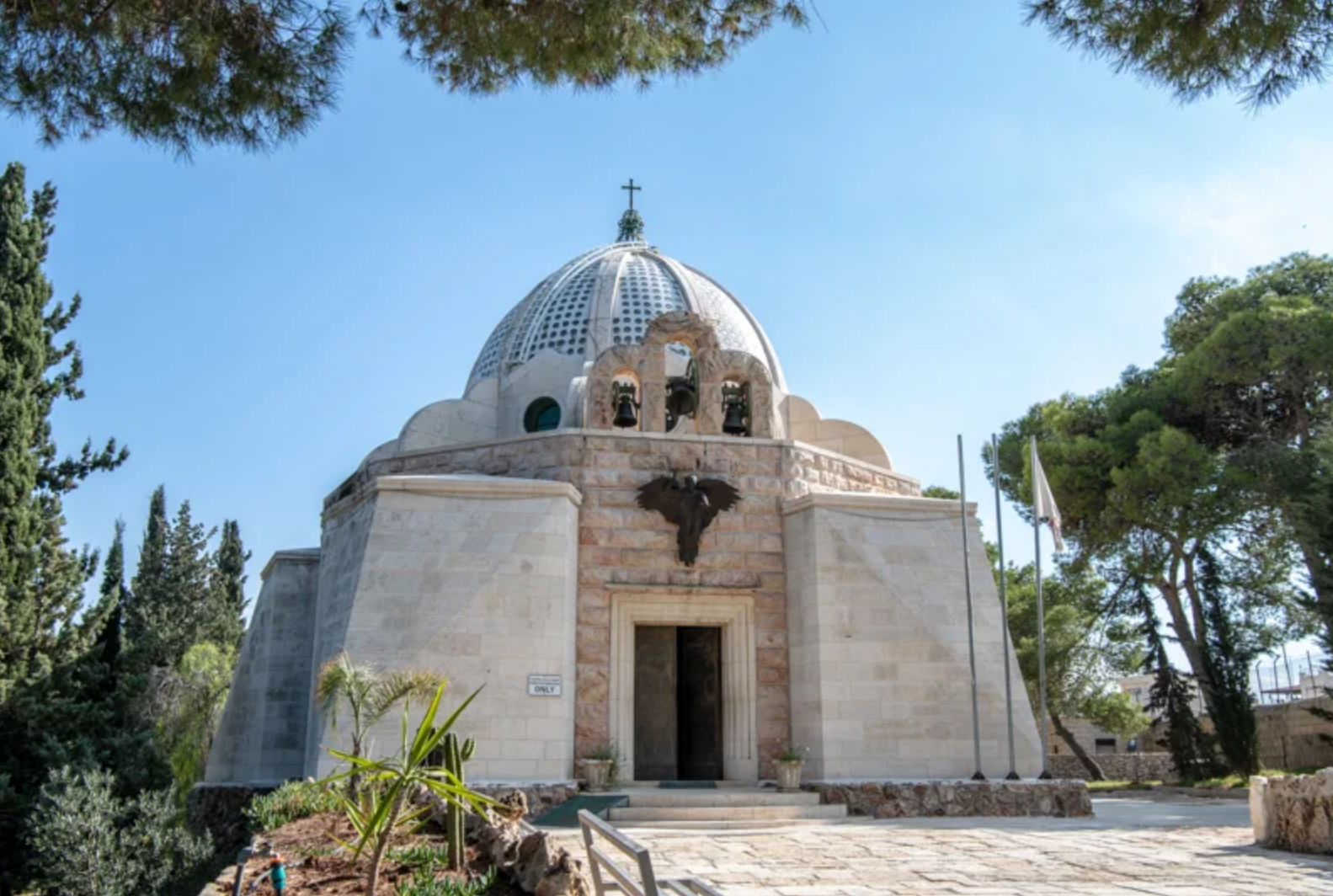
Façade of the Chapel of the Shepherds’ Field, built by Antonio Barluzzi. Photo: Custody of the Holy Land
The architect had the ingenious idea of crowning his building with a dome perforated by small openings—an architectural feature common in Turkish baths—through which daylight filters in. Instinctively, these wells of light draw the gaze upward toward the heavens, toward the angelic apparition. Beneath the dome, the lintels of the arches surrounding the choir bear, inscribed in Latin, the words of the angels’ greeting to the shepherds:
Gloria in excelsis Deo et in terra pax hominibus bonae voluntatis
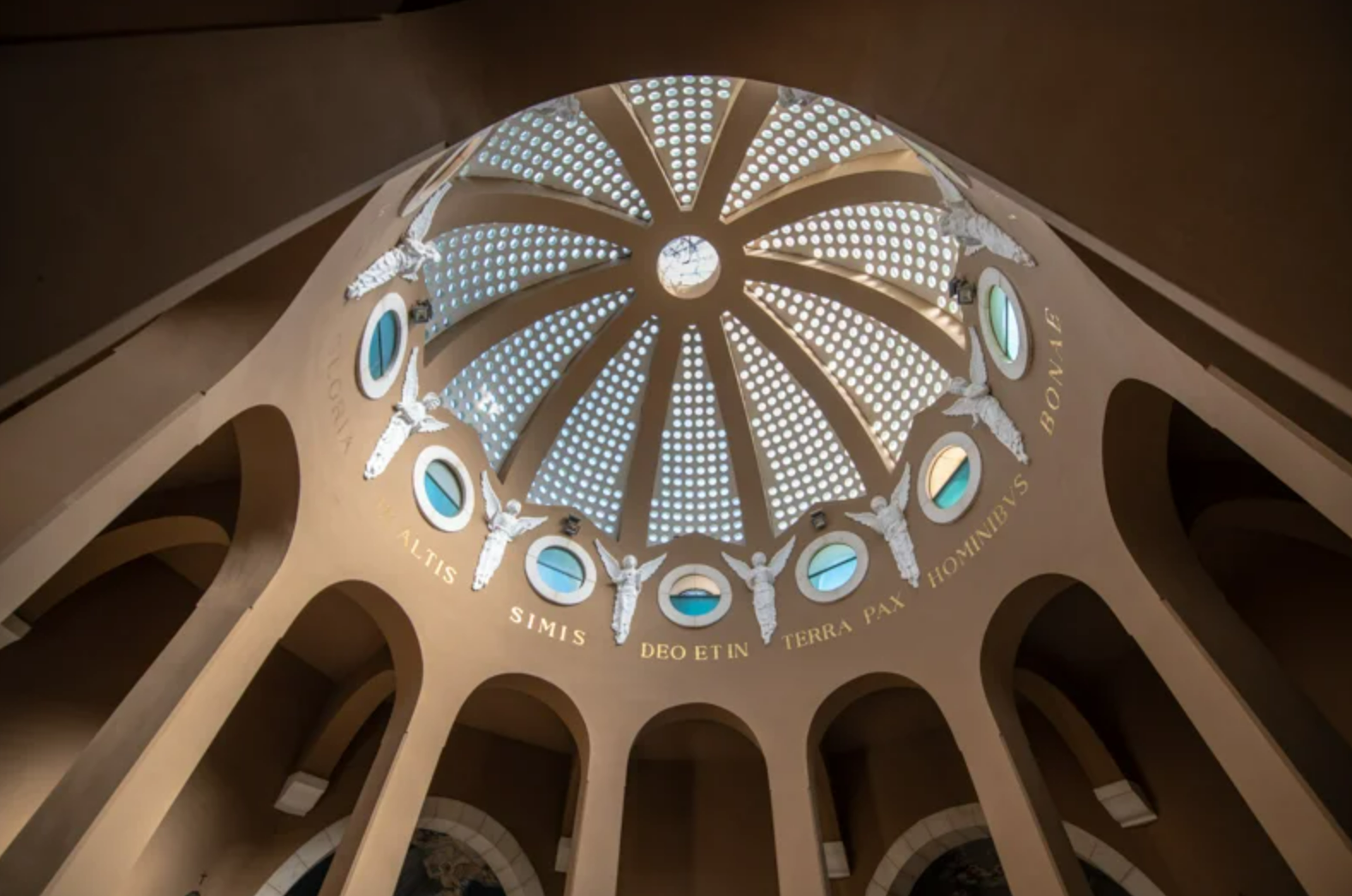
Interior of the dome of the Chapel of the Shepherds’ Field. Photo: Custody of the Holy Land
These shepherds, the Gospel tells us, “were keeping the night watch over their flock” (Luke 2:8). It is striking that the Palestinian town where the Shepherds´ field is located is called “Beit Sahur,” which means “the house of those who keep watch.” The inhabitants of Bethlehem refused to make room in their houses for the Holy Family. They rejected the Light of the world even before He was born. It was shepherds keeping watch in the cold of the night that “the glory of the Lord” enveloped with its glorious light, to reveal to them the birth of the Savior (cf. Luke 2:9).
Beneath this small chapel, caves hewn into the rock by the local shepherds have been transformed by the Franciscans into oratories so that groups of pilgrims might celebrate Mass. Whether in the season of Christmas or under the heat of summer, the voices of carols resound in the Shepherds´ field.
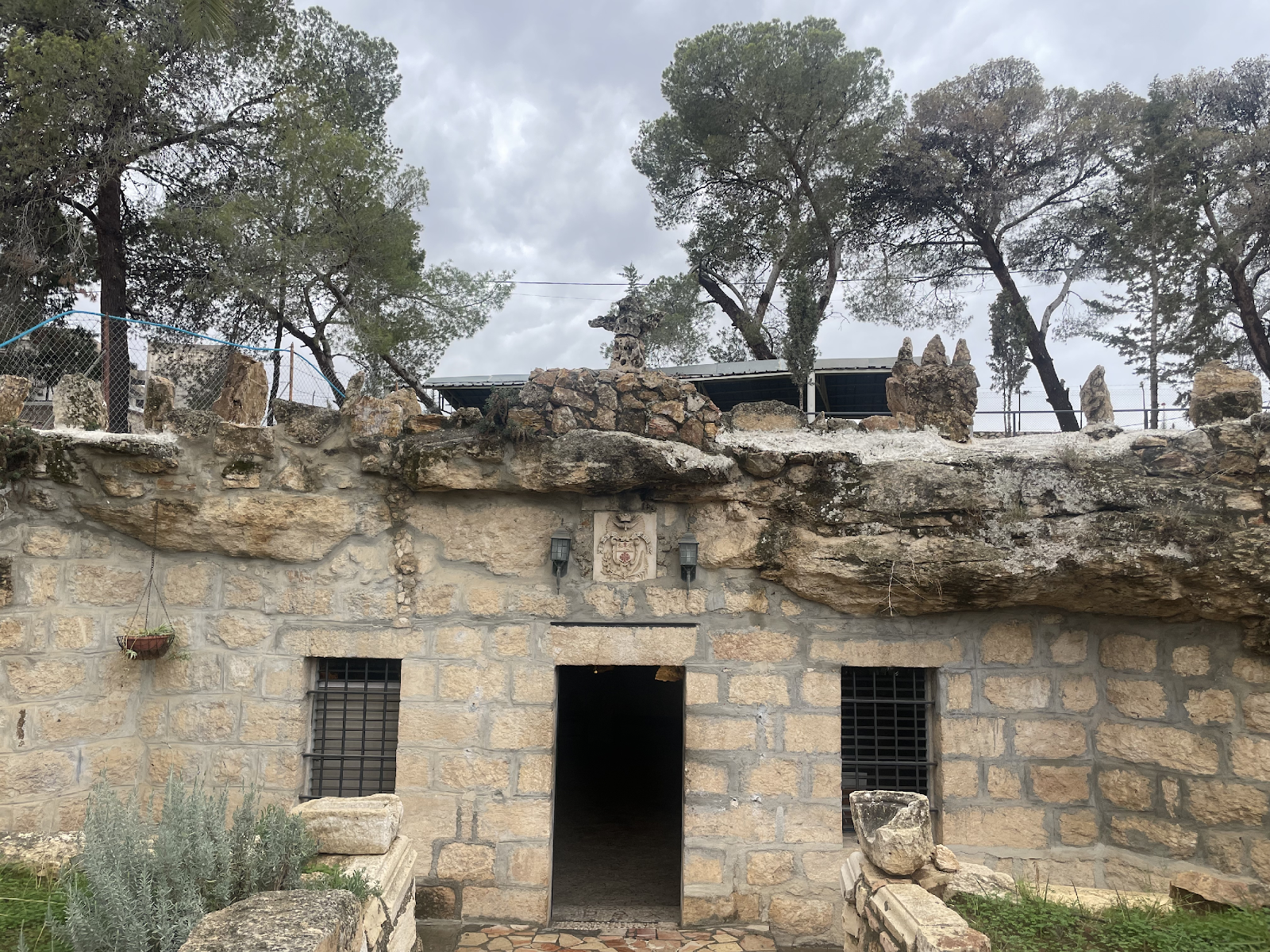
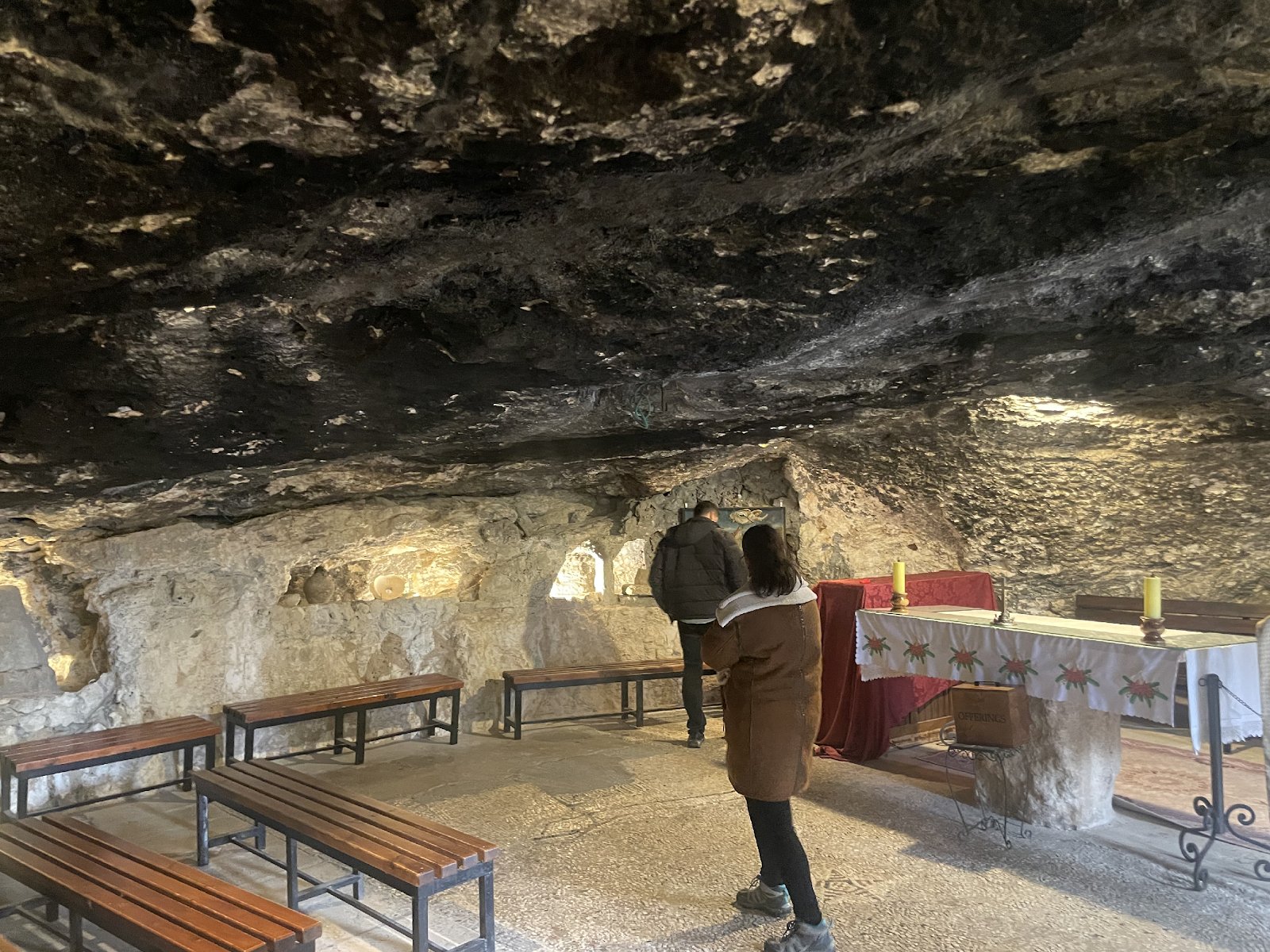
Further below, excavators brought to light the remains of dwellings and of church from the Byzantine era.
Even at that time, the place in Beit Sahur was already identified as the site of the angels’ appearance to the shepherds.
Saint Jerome, who knew the area well from living in Bethlehem, adds the following in his Latin translation of the Onomasticon (a catalogue of biblical places) by Eusebius of Caesarea:
“One mile farther [from Bethlehem], near the tower of Ader, which means “tower of the flock,” is where the shepherds heard prophetically of the Lord’s birth before it happened. Also near this same Bethlehem is pointed out the tomb of one of the kings of Judaea, Archelaus, which is reached first on a narrow path diverting from the main highway to our cell.”
From a factual point of view, the distance (one mile) mentioned by Jerome corresponds perfectly to the location of the Shepherds´s field in Beit Sahur (1.6 km on a straight line). More interesting, however, is the name that Saint Jerome gives to that place: “Turris Ader”—the Tower of the Flock. It refers to the book of the prophet Micah. The most famous prophecy by said prophet, is the one that speaks of the birth of “him who is to rule Israel” in Bethlehem Ephrathah, namely (Micah 5:1–3):
“But you, Bethlehem-Ephrathah | least among the clans of Judah, | from you shall come forth for me | one who is to be ruler in Israel; | whose origin is from of old, | from ancient times. Therefore the Lord will give them up, until the time | when she who is to give birth has borne; | then the rest of his kindred shall return | to the children of Israel. He shall take his place as shepherd | by the strength of the LORD, | by the majestic name of the LORD, his God; | and they shall dwell securely, for now his greatness | shall reach to the ends of the earth.”
Two themes are worth highlighting: that of light and that of the shepherd. The light (5:2) is the one that appeared to the shepherds. The figure of the shepherd refers to David—who was anointed by Samuel upon returning from tending his father Jesse’s sheep—from whose lineage Christ descends. Just as David was a shepherd of sheep, the Messiah (the Anointed One) will be the shepherd of his people.
Precisely, in the preceding chapter, Micah also speaks of the sheep and already announces the shepherd of Israel (Mic 4:6–8):
“On that day—oracle of the LORD— | I will gather the lame, | and I will assemble the outcasts | and those whom I have afflicted. I will make of the lame a remnant, | and of the weak a strong nation; | The LORD shall be king over them on Mount Zion, | from now on and forever. And you, O tower of the flock, | hill of daughter Zion! | To you it shall come: | the former dominion shall be restored, | the reign of daughter Jerusalem.”
The Lord, the prophet tells us, will reign over Mount Zion—that is, Jerusalem. It seems, however, that Micah is already moving beyond the Holy City: the oracle concerning the “tower of the flock” (Turris Ader in Latin) appears immediately before the one regarding Bethlehem Ephrathah (Mic 5:1). On the basis of this text, Saint Jerome affirms that the “Tower of the Flock” (Turris Ader) is precisely in the shepherds´field were keeping watch when they received the news of the birth of the Savior of Israel, Jesus Christ.
By Henri Gourinard